Quotations
Centre for Economics, Science and Politics
QUOTATIONS
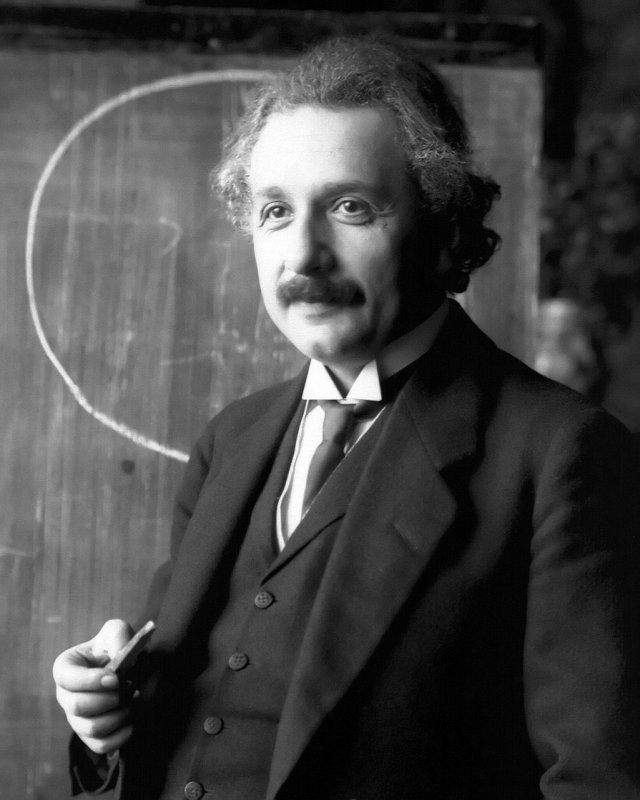
Albert Einstein (14.3.1879 – 18.4.1955)
Quoting Albert Einstein is no simple undertaking. We have listed many quotations on this page, many of which are unfortunately unverified or clearly not by Albert Einstein at all. To date, there is no German collection of Albert Einstein quotations.
We are grateful to Barbara Wolff of the Albert Einstein Archives at the Hebrew University of Jerusalem, Israel, who pointed out errors in the quotations and provided a source or comment for every quotation. We then revised our collection accordingly. At the end, we have deliberately retained a few “famous” Albert Einstein quotations, but with a note that they are unlikely to be his, even though they are widely attributed to him.
We would like to express our heartfelt thanks to Barbara Wolff for her work.
- “The most beautiful thing we can experience is the mysterious.”
From “How I See the World” (1930)
- “I never think of the future. It comes soon enough.”
Aphorism for Ladies’ Home Journal, December 1946
- “...Anyone who regards their own life and that of their fellow human beings as meaningless is not merely unhappy, but hardly fit for life.”
From a note written around 1930; first published in “Mein Weltbild” (1934)
- “Anyone who does not know [the mysterious] and can no longer wonder, can no longer marvel, is as good as dead, and their eyes are dimmed.”
From “How I See the World” (1930)
- “To be an impeccable member of a flock of sheep, one must above all be a sheep oneself.”
Aphorism for Leo Baeck, 1954
- “I do not know [what weapons will be used in a third world war]. But I can tell you what they will use in the fourth: rocks.”
[Asked what weapons would be used in a Third World War, he made this characteristic reply: “I don’t know. But I can tell you what they’ll use in the fourth – rocks.”] From Alfred Werner’s interview “Einstein at Seventy” in Liberal Judaism 16 (April–May 1949)
- “Money appeals only to selfishness and invariably tempts its owners irresistibly to abuse it.”
From “On Wealth”; first published in “Mein Weltbild” (1934)
- “Yes, one must divide one’s time between politics and our equations. But our equations are much more important to me; politics is for the present, whereas such an equation is for eternity.”
Recalled by Albert Einstein’s assistant Ernst Straus; first published in Carl Seelig’s “Helle Zeit – Dunkle Zeit” (1956).
- “Ever since the mathematicians invaded the theory of relativity, I do not understand it myself any more.”
This is probably an authentic, though not entirely serious, statement by Einstein from around 1907–08.
- “If someone can enjoy marching in rank and file to music, I already despise them; they have been given their large brain by mistake, since a spinal cord would have been quite enough.”
From “How I See the World” (1930)
- “Two things are needed for our work: tireless perseverance and the willingness to discard something into which one has put much time and effort.”
Also recalled by Einstein’s assistant Ernst Straus; first published in Carl Seelig’s “Helle Zeit – Dunkle Zeit” (1956).
- One more application of the principle of relativity, for the reader’s amusement: today I am described in Germany as a “German scholar” and in England as a “Swiss Jew”. If I should ever find myself presented to newspaper readers as a “bête noire”, the descriptions would be reversed: to the Germans I would be a “Swiss Jew”, and to the English a “German scholar”.
Concluding remark in “What Is the Theory of Relativity?”, written for The Times (London), November 1919
- “The eternally incomprehensible thing about the world is its comprehensibility.”
From “Physics and Reality” (1936)
- “It is harder to shatter a preconceived opinion than
an atom.”An inaccurate rendering of a quotation from an interview with Michael Amrine, published in the New York Times on 23 June 1946. It reads: “It is easier to denature Plutonium than it is to denature the evil spirit of man.” Asked whether he had really said that it was easier to denature plutonium than the evil spirit of human beings, Albert Einstein nevertheless wrote: “not said by me” (to Carl Seelig, undated, around 1953). - “A new type of thinking is essential if mankind is to survive.”
A shortened version, taken out of context and stripped of meaning, of a statement Albert Einstein made in spring 1946 as a representative of the Emergency Committee of Atomic Scientists.
- “The progress of scientific development is, in the end, a continual flight from wonder.”
Probably a shortened translation from English; quotations with similar content can be documented.
- «If a cluttered desk is a sign of a cluttered mind, of what, then, is an empty desk a sign?»
This is one of countless quotations circulated under Einstein’s name whose origins cannot be established and which, in all probability, are not by Albert Einstein.
- “Two things are infinite: the universe and human stupidity; and I am not yet completely sure about the universe.”
This is another quotation circulated under Einstein’s name whose origins cannot be established and which, in all probability, is not by Albert Einstein.
- “I am more interested in the future than in the past, for that is where I intend to live.”
This very popular quotation is certainly not authentic either.
- “Chopping wood is so popular because the results can be seen immediately.”
It is possible that Einstein really made this remark. We do not, however, have evidence of it.
Forum Einstein • Kramgasse 16 • CH-3011 Bern • Tel: +41 31 312 64 33 • Fax: +41 31 312 64 35 • info@forum-einstein.org